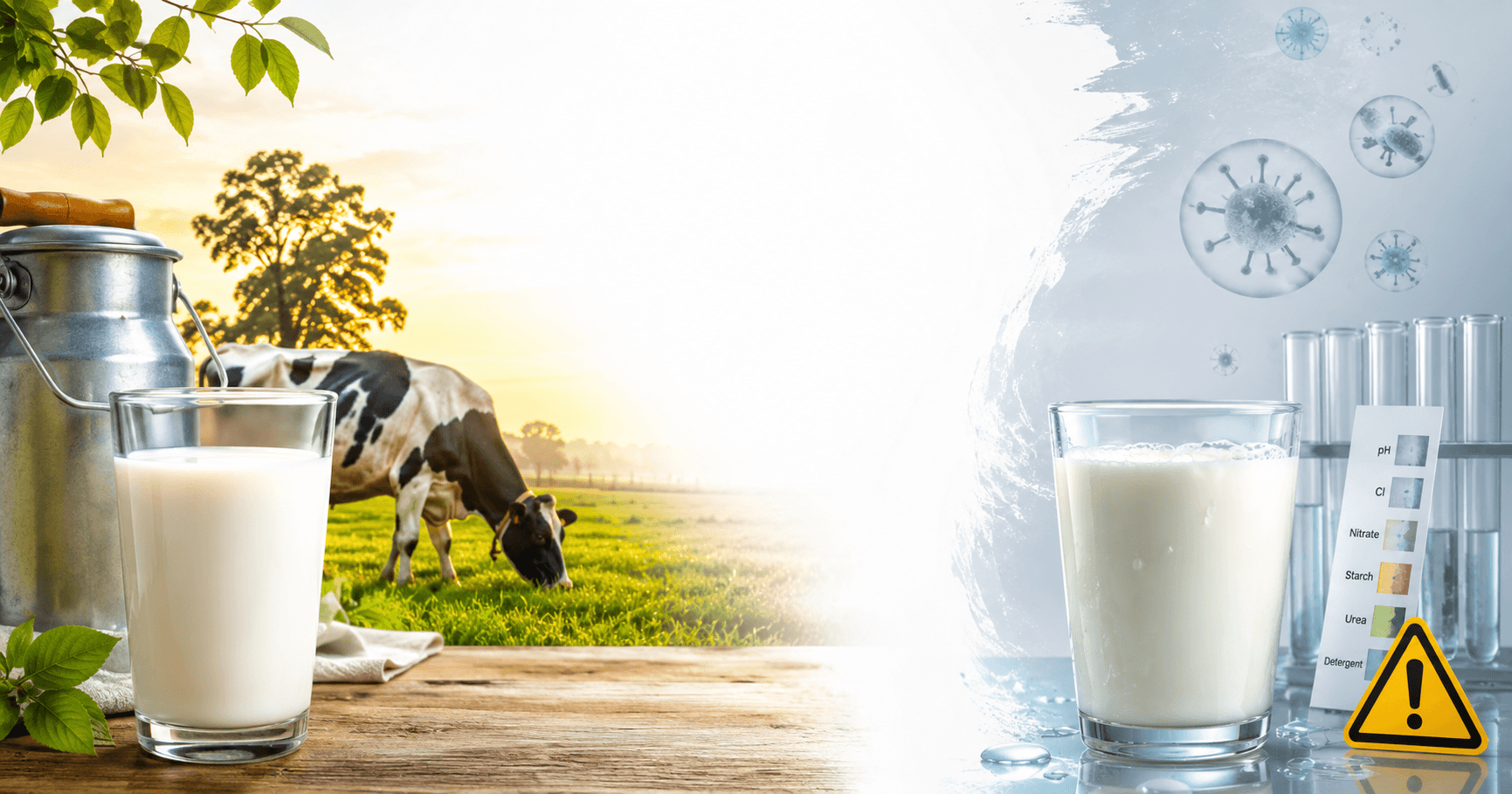
Milk is one of the most nutritious foods consumed every day by millions of families. It provides protein, calcium, vitamins, healthy fats, and essential minerals that support growth, bone strength, and overall health. Unfortunately, milk adulteration has become a serious concern in many regions. Adulterated milk may contain added water, detergents, starch, synthetic chemicals, urea, or other harmful substances that reduce nutritional value and may affect health.
This guide explains everything you need to know about pure milk and adulterated milk, how to identify the difference, common adulterants, health risks, home testing methods, and tips for buying safe milk.
What is Pure Milk?
Pure milk is natural milk obtained from healthy animals without adding or removing any substance. It retains its original nutrients, natural taste, aroma, fat, and protein content. Good quality milk should be hygienically collected, properly filtered, rapidly cooled, and stored under safe conditions.
What is Adulterated Milk?
Adulterated milk is milk whose natural quality has been intentionally altered. Sellers may add water to increase quantity or use starch, detergents, urea, synthetic milk compounds, sugar, salt, or preservatives to imitate genuine milk. These practices reduce quality and can pose health risks.
Common Milk Adulterants
Water – Reduces nutritional value.
Starch – Makes diluted milk appear thicker.
Detergent – Creates artificial froth and whiteness.
Urea – Increases apparent protein readings.
Synthetic chemicals – Mimic natural milk properties.
Sugar or glucose – Masks dilution.
Salt – Alters density readings.
Formalin or preservatives – Extend shelf life illegally.
Health Risks
Children, pregnant women, and older adults are especially vulnerable. Consumption of adulterated milk may contribute to digestive problems, stomach infections, diarrhea, kidney stress, allergic reactions, reduced nutrition, and long-term exposure to harmful chemicals.
How to Identify Pure Milk at Home
Water Test: Place a drop on a polished surface. Pure milk flows slowly leaving a white trail.
Starch Test: Add iodine solution. Blue color indicates starch.
Detergent Test: Shake milk. Excess foam that remains may indicate detergent.
Smell Test: Pure milk has a pleasant natural aroma.
Taste Test: Pure milk has a mildly sweet natural taste.
Heating Test: Pure milk forms a cream layer after cooling.
Pure Milk vs Adulterated Milk Comparison
Appearance: Pure milk has natural creaminess; adulterated milk may look unnaturally white.
Taste: Pure is mildly sweet; adulterated may taste flat or chemical.
Nutrition: Pure retains natural nutrients; adulterated loses quality.
Safety: Pure is safe when hygienically handled; adulterated may be harmful.
How to Buy Safe Milk
Buy from trusted dairy farms.
Check cleanliness and cold-chain storage.
Prefer transparent sourcing.
Verify FSSAI registration.
Store below 4°C.
Boil fresh raw milk before consumption.
Frequently Asked Questions
Q: Is boiling milk enough to remove adulteration?
A: No. Boiling kills many microorganisms but does not remove chemical adulterants.
Q: Can children drink raw milk?
A: Raw milk should be boiled before consumption unless officially pasteurized and recommended.
Q: Can children drink raw milk?
A: Raw milk should be boiled before consumption unless officially pasteurized and recommended.
Conclusion
Choosing pure milk is an investment in your family's health. Always purchase milk from reliable dairy farms that follow hygienic collection, storage, and delivery practices. Understanding common adulteration methods and learning simple home tests can help you make informed decisions. Safe, fresh, and high-quality milk supports better nutrition, stronger immunity, and long-term well-being.